

Do you remember your childhood bedroom? Maybe not in detail, but I’m sure you remember how it felt.
My mother was very inspired by Laura Ashley. She dressed us in white pinafore dresses, sometimes embellished with ribbons and bows, but for everyday it was white on white cotton. I was very proud of the grown-up autumn-coloured bedroom my mother put together for me. She’d decorated the walls with straw hats threaded with flowers hanging over strings of beads. The childhood I remember plays out in 70s sepia tones, feathered hairstyles, Biggie Best fabrics, layers of translucent fabric and small flower prints everywhere.
I grew up with hippies, an architect father and home economist mother, and I think I was lucky to be one of the first of the five children who got to inhabit their dreams expressed in their first house together. Every colour and shape from that house still inspires my work.
When it came to my own child I was acutely aware of how her surroundings would shape her. Even in Asunción, where options were very limited, I tracked down some IKEA furniture in a small shop I think only I appreciated, because I think I emptied it. I set up a colourful, stimulating room.
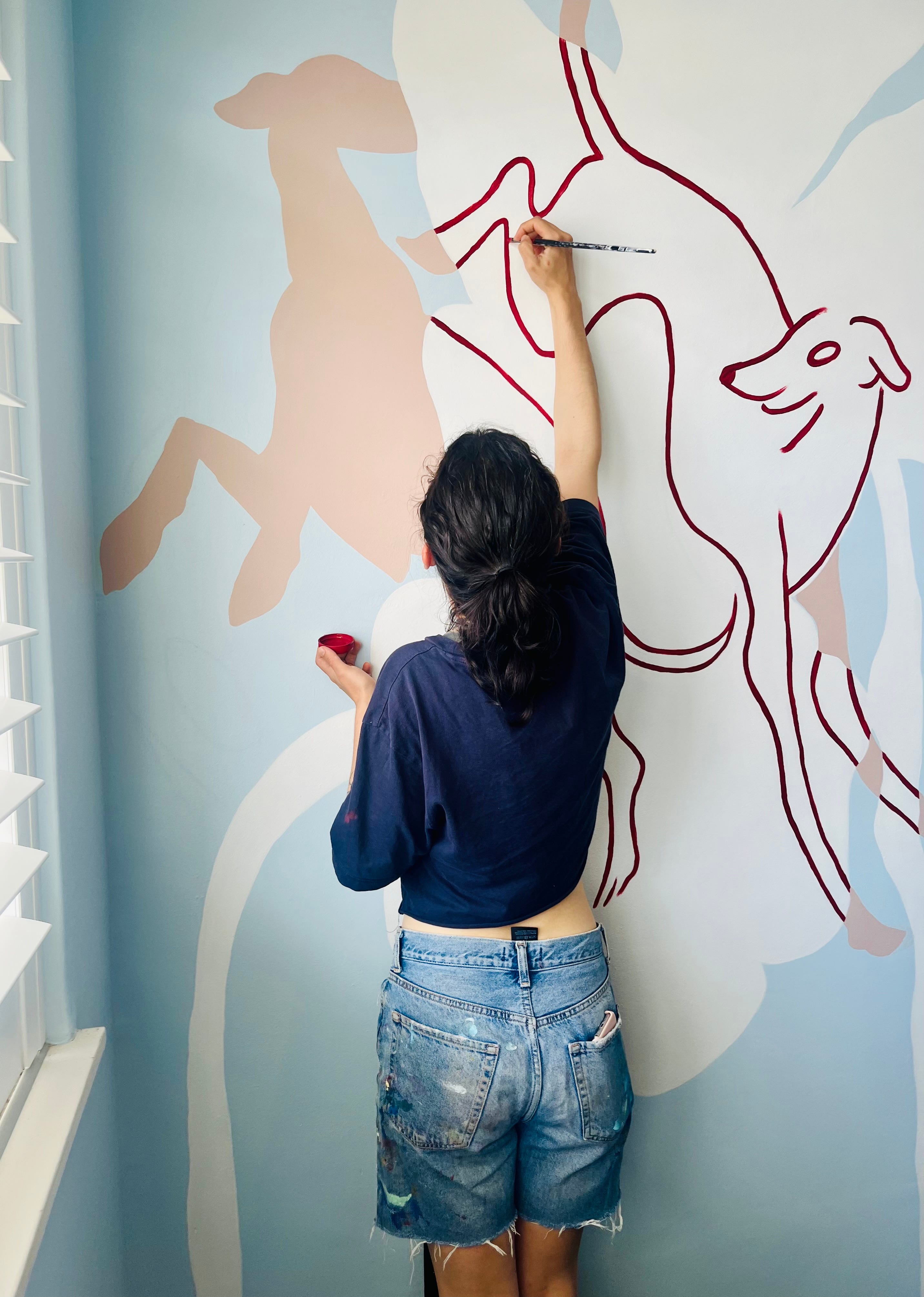
I wanted to paint a mural full of African savanna animals. I’m not an artist, so I asked my little brother to draw something I could replicate on the wall. The problem is that my brother is a real artist. What came back was a drawing I could not have reproduced in my wildest dreams.

So I drew the animals as best I could and told myself: she’s a newborn, she won’t judge me. It even made it onto the cover of the Home and Garden supplement of the local newspaper!

She remembers that mural fondly. She has since taken to painting her own murals. Billboards even. She’s outshining me.
How it started:

How it is going:
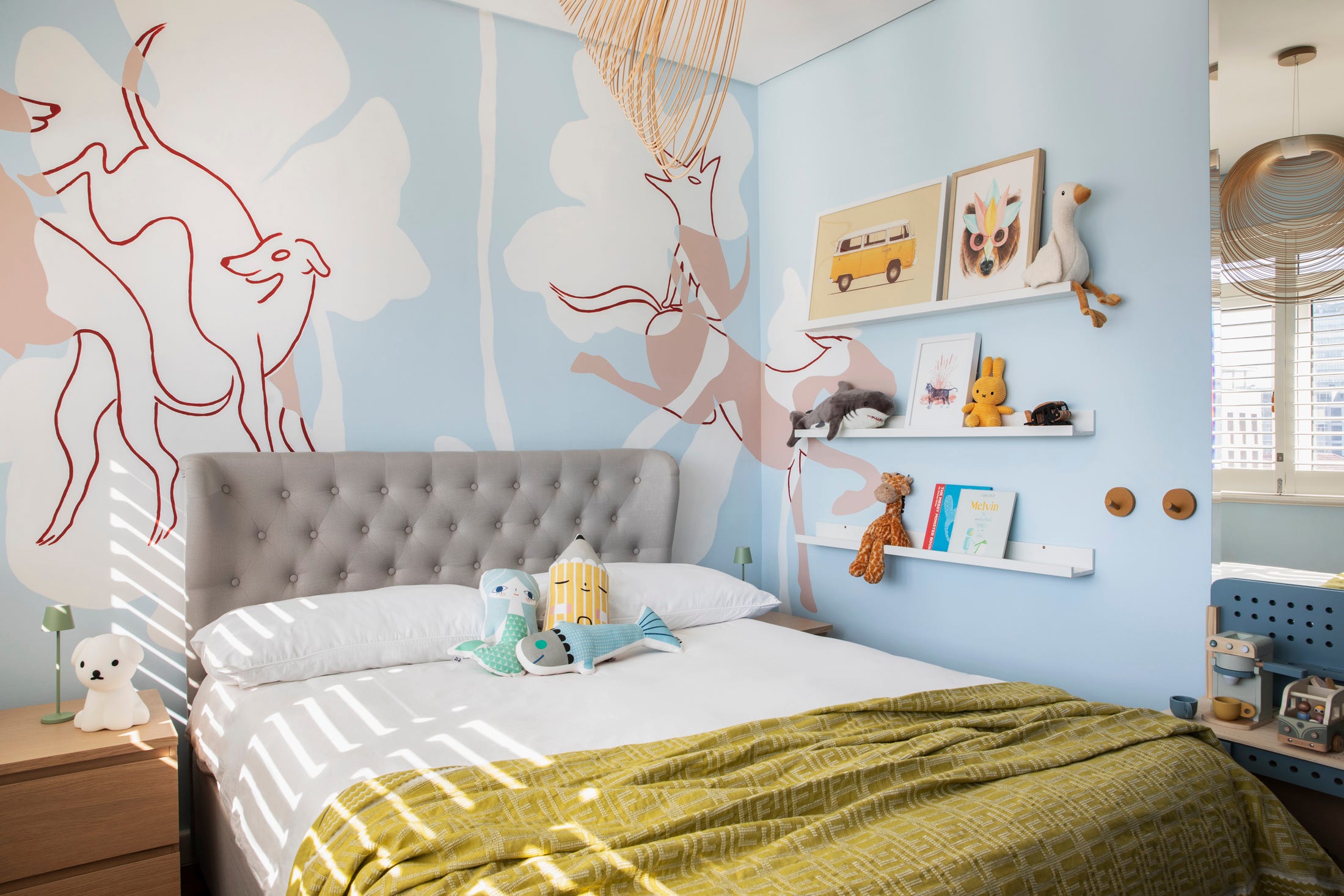
Our bedrooms are the rooms we spend the most time in, where we get to relax, dream and where we are inspired but they are usually the last on the list. This is true for kids rooms but also for the adults.
The best art hangs where guests see it. The best finishes are for the common areas. The good furniture is reserved for people who visit once a year. Meanwhile, the room that shapes our imagination and our mood, the place we need to recharge and reconnect, gets the broken stuff and the pile of clothes that need sorting.
Adults spend roughly a third of their lives in bed. If you live to 80, that’s over 26 years horizontal. That number deserves some attention.
As winter creeps in, I’ve been thinking about how we cocoon. On 25 July I’ll be speaking at Milner Fashion House, 161 Milner Street, Waterkloof, Pretoria on this exact subject. More details soon. In the meantime, follow along here as we work our way through the bedroom.
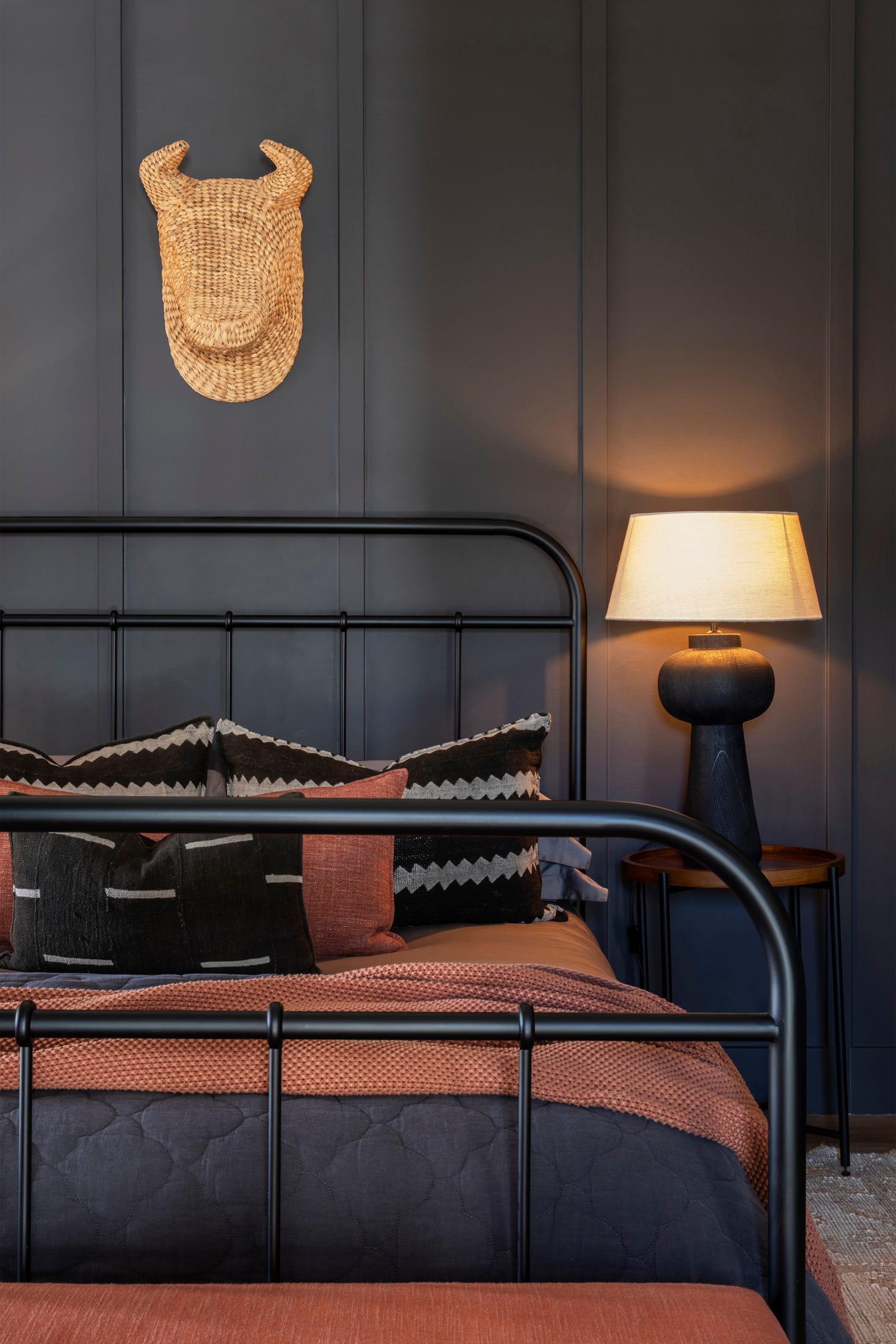
But where do you even start when it comes to the bedroom?
Start with the bed.
Invest in a good mattress, medium firmness, not too soft and not too hard. Change it every 8 to 10 years, or as soon as it starts sagging, especially around the edges. A study found that switching from an old sagging mattress to a new medium-firm one improved sleep quality by 48% and reduced perceived stress by 55%. That is not a small number.
Then work your way up. In Johannesburg winters we want to climb into a warm bed, so start with a fitted electric blanket, turned off once you’re under the covers. Follow with a mattress protector, which extends the life of the mattress. Then a mattress topper for comfort. Then the fitted sheet.
The flat sheet has fallen out of fashion in South Africa but it earns its place. Under the duvet it acts as a temperature buffer. Ideal sleep temperature is 15 to 19 degrees Celsius, and overheating is one of the most common causes of restless sleep.
Top it with a down duvet. Yes, down. Contrary to what most people believe, down is naturally hypoallergenic and resistant to dust mites, mould and bacteria. Medical studies show that synthetic pillows may contain eight times more allergens than down-filled ones. What dust mites love is warmth and moisture. They feed on skin cells, not feathers. The exception is a genuine feather allergy, which is rare and different from dust mite sensitivity. A quality down duvet also regulates temperature in a way synthetic fill cannot. It responds to your body rather than holding a fixed warmth, which is why you sleep warmer under a cheap synthetic on the same cold night.
Pillows are where most people are most negligent. We should replace them every one to two years. Synthetic fills can be done in six months. Natural materials, down, feather, latex, can last five to ten years with proper care. The test: fold your pillow in half and let go. If it doesn’t spring back within a few seconds, it’s finished. Back sleepers need medium-firm support that keeps the neck neutral. Side sleepers need more loft to bridge the gap between head and mattress.
On sheets: I love a good percale. It’s harder to find than it should be, so I use 300 thread count Egyptian cotton. The sweet spot for percale is 200 to 400 thread count. Above 600, the count is almost always inflated, multiple strands twisted together, more marketing than fabric. Fibre quality matters more than the number. Long-staple cotton, Supima, Egyptian. Percale’s one-over-one weave promotes airflow and wicks moisture. Sateen is softer and silkier but holds more heat, which makes it a harder choice in a warm climate.
Once the bed is sorted, look at the headboard. I like a soft upholstered headboard. Be careful with velvet. I have one and I know from experience that it marks exactly where your head goes. Choose a fabric that will age well.
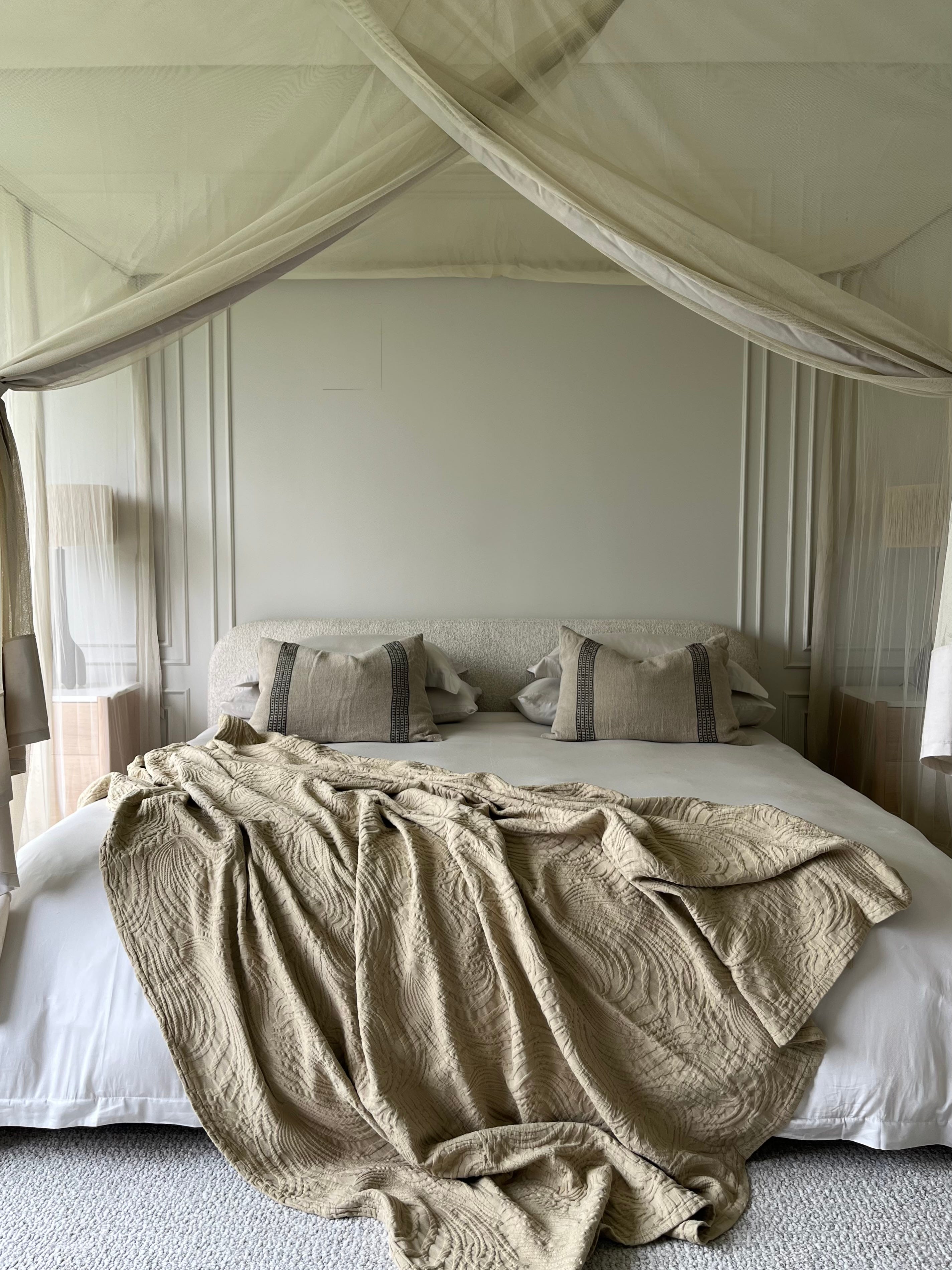
Scatters and throws are the easiest way to change the feeling of a room without changing the room. Swap them seasonally. It costs very little and it works.
Layering
Layering materials, wallpaper, art, curtains, scent and sound creates intimacy. Use natural fibres. Use things that feel good to touch, because you will touch them every day.
Light
There is a moment when light stops being functional and becomes intentional. Layer it. Bedside lamps or pendants, sconces, LEDs for mood. Overhead lighting is for cleaning. That’s it.
Art
Good art should not be reserved for the common areas. Your bedroom is where you begin and end every day. Honour it accordingly.